

What Happens to the Soul During the First Days After Death?
The Orthodox Tradition and the teachings of the Holy Fathers of the Church give us a spiritual picture of the journey of the soul immediately after it leaves the body, as well as the importance of memorial services.
1st–3rd Day: The Soul’s Presence on Earth
The soul remains close to the body and to the home where it lived.
It watches over its relatives and also attends the funeral service.
According to Saint Macarius of Egypt, on the 3rd day the soul receives a certain freedom of movement on earth, while at the same time it is led before God to worship Him. For this reason, the Church offers the Trisagion prayer and the 3rd-day memorial service.
3rd–9th Day: The Toll Houses and the Vision of Paradise
Saint John of Damascus speaks about this temporary judgment of the soul.
Saint Macarius of Egypt and Saint John Chrysostom describe what are known as the “toll houses,” that is, spiritual trials through which the soul passes, encountering angels and demons according to the life it lived.
The prayers of the living—the memorial services, the Divine Liturgy, and acts of charity—bring great comfort and assistance to the soul.
Afterwards, the soul beholds the beauty of Paradise. This period is understood as an opportunity for the soul to experience the blessings that God has promised to those who love Him.
On the 9th day, the soul again worships before God, which is why the 9th-day memorial service is offered.
9th–40th Day: The Vision of Hell
During the period from the 9th to the 40th day, the soul is accompanied by angels and is shown the places of hell and punishment.
Upon completion of the 40 days, the soul is once again brought before God for the preliminary judgment, remaining in this state until the Second Coming of Christ.
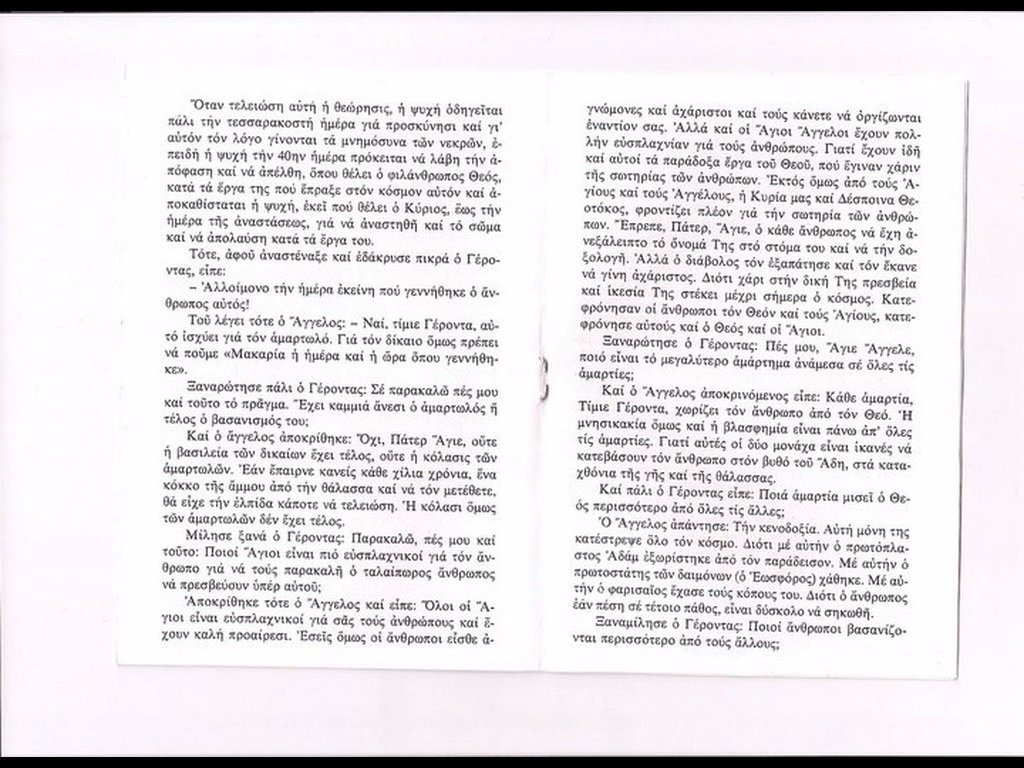
Τι συμβαίνει με την ψυχή τις πρώτες ημέρες μετά τον θάνατο;
Η Ορθόδοξος Παράδοση και η διδασκαλία των Αγίων Πατέρων της Εκκλησίας μάς δίνουν μια πνευματική εικόνα για την πορεία της ψυχής αμέσως μετά την έξοδό της από το σώμα, καθώς και για τη σημασία των μνημοσύνων.
1η – 3η Ημέρα: Η παραμονή στη Γη
* Η ψυχή παραμένει κοντά στο σώμα και στο σπίτι όπου έζησε.
* Παρακολουθεί τους συγγενείς της, καθώς και την εξόδιο ακολουθία (κηδεία).
* Σύμφωνα με τον Άγιο Μακάριο τον Αιγύπτιο, την 3η ημέρα η ψυχή αποκτά μια ελευθερία κίνησης στη γη, ενώ παράλληλα οδηγείται ενώπιον του Θεού για προσκύνηση. Για το γεγονός αυτό, η Εκκλησία τελεί το τρισάγιο (3ήμερα).
3η – 9η Ημέρα: Τα Τελώνια και η Θέαση του Παραδείσου
* Ο Άγιος Ιωάννης ο Δαμασκηνός μιλά για την προσωρινή αυτή κρίση της ψυχής.
* Ο Άγιος Μακάριος ο Αιγύπτιος και ο Άγιος Ιωάννης ο Χρυσόστομος περιγράφουν τα λεγόμενα «τελώνια», δηλαδή τις δοκιμασίες μέσα από τις οποίες διέρχεται η ψυχή αντιμέτωπη με αγγέλους και δαίμονες, ανάλογα με τη ζωή που έζησε.
* Η προσευχή των ζώντων (τα μνημόσυνα, η Θεία Λειτουργία και οι ελεημοσύνες) προσφέρει μεγάλη ανακούφιση και ενίσχυση στην ψυχή.
* Στη συνέχεια, η ψυχή βλέπει την ομορφιά του Παραδείσου. Η περίοδος αυτή προορίζεται για να γνωρίσει η ψυχή όσα υποσχέθηκε ο Θεός σε όσους Τον αγαπούν.
* Την 9η ημέρα, η ψυχή προσκυνά ξανά τον Θεό, γι' αυτό και τελείται το 9ήμερο μνημόσυνο.
9η – 40ή Ημέρα: Η Θέαση της Κολάσεως
* Κατά το διάστημα από την 9η έως τη 40ή ημέρα, η ψυχή συνοδεύεται από αγγέλους και βλέπει τους τόπους της κολάσεως και της τιμωρίας.
* Με την συμπλήρωση των 40 ημερών, η ψυχή οδηγείται εκ νέου ενώπιον του Θεού για την προκαταρκτική κρίση μέχρι τη Δευτέρα Παρουσία



No comments:
Post a Comment